
Industrial equipment, outdoor infrastructure, and mission-critical data center hardware require identification tags that can survive conditions capable of destroying standard media. Many customers turn to durable metal identification tags for these situations. Selecting the right metal identification tag requires balancing material properties against environmental stress, mounting options, and regulatory requirements. Whether you are managing warehouse assets under an overarching warehouse labeling strategy, auditing server racks, or meeting defense procurement standards, this buyer’s guide details how to select the right metal labels and metal asset tags for your enterprise.
When to Use Metal Labels
Metal labels are used for long-term identification of high-value equipment, machinery, and infrastructure operating in harsh indoor and severe outdoor environments.
Standard polyester or paper labels often work best in indoor, climate-controlled environments like secondary packaging or temporary storage racks; metal labels are worth the added investment when asset loss, scanning failure, or regulatory non-compliance presents significant financial risk. Research suggests that a typical warehouse may face an annual inventory error value of $195,000. A high-quality metal labeling system can help mitigate this risk.
Metal Labels Compared
Selecting the ideal metal tag depends on the mechanical forces, chemical exposures, and atmospheric conditions present in your operating environment.
Anodized Aluminum
Lightweight and highly corrosion-resistant, anodized aluminum tags are the industry standard for photosensitive asset tracking. Through photo-anodization, the barcode image and human-readable text are sealed directly within the aluminum’s anodic layer rather than printed on top. This process creates exceptionally high scan contrast for metal barcode labels and ensures the graphics remain legible even after decades of exposure to moisture, sunlight, and solvents. Premium aluminum tags offer an optimal balance of flexibility, durability, and cost for indoor and outdoor machinery.
Stainless Steel
Stainless steel is the ultimate heavy-duty material for environments featuring severe abrasion, caustic chemical exposure, or extreme temperatures exceeding 1,000°F. Typically produced in Grade 304 or 316, stainless steel tags resist pitting from saltwater, acid washdowns, and heavy impact. They are widely specified for heavy manufacturing equipment, chemical processing lines, and marine assets where standard metal tags would corrode or wear smooth.
Brass
Brass provides a spark-resistant identification option specifically engineered for application near flammable gases, combustible dust, or explosive materials. In addition to its safety profile in hazardous locations, brass offers a distinct decorative finish frequently used for high-end indoor and outdoor metal nameplates. Because brass is softer than aluminum or stainless steel, it is more susceptible to surface abrasion over time and is best suited for low-wear environments or protected machinery surfaces.
Engraved and Embossed Options
When an asset requires permanent identification that must stay readable even under thick layers of grease, dirt, or field-applied paint, engraved or embossed tags are preferred over surface-printed barcodes. Engraved metal tags cut human-readable serial numbers or 2D codes directly into the metal surface, ensuring the marking remains fully legible without electronic scanning equipment or ink. For custom applications requiring specific dimensions, mounting hole configurations, or unique numbering sequences, custom metal tags can be stamped, photo-etched, or laser-engraved to exact specification.
Benefits of Metal Labels for Asset Tracking and Compliance
Metal asset labels provide permanent, fail-safe equipment identification that eliminates re-tagging costs, prevents loss, and maintains regulatory compliance across severe operating lifecycles.
Using high-durability metal asset tags across your operation delivers five core operational advantages: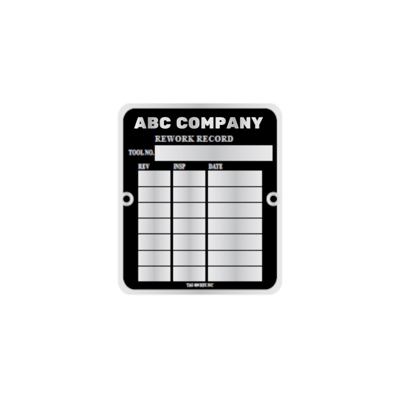
- Equipment Monitoring: A permanent, scannable metal ID tag accelerates checking machinery, tools, and hardware in and out of enterprise resource planning (ERP) or computerized maintenance management systems (CMMS).
- Maintenance Reliability: Tying service records and inspection schedules to a durable metal equipment tag reduces missed maintenance windows, ensures technician accuracy, and prevents unscheduled downtime.
- Loss and Theft Prevention: Securely attached metal property tags serve as a clear visual warning of corporate ownership. Tamper-resistant adhesives or mechanical fasteners make unauthorized removal extremely difficult.
- Audit and Compliance Support: High-contrast asset tag labels provide auditors with a reliable, error-free method to verify capital assets and regulatory adherence during annual facility audits.
- Inventory Control: Because durable metal inventory tags withstand decades of operational wear without peeling or fading, facility managers maintain accurate records throughout the equipment’s lifespan without needing to re-tag.
Choosing Metal Labels by Environment
Matching label specifications to specific operational conditions prevents premature identification failure.
Outdoor and Weatherproof Applications
High-grade photo-anodized aluminum metal labels are designed to last 20 years or more outdoors. Because outdoor equipment faces constant exposure to ultraviolet radiation, moisture, salt spray, and extreme thermal swings, standard printed inks fade rapidly under solar UV, turning barcodes un-scannable within months. Photo-anodized metal tags seal graphics beneath a sapphire-hard oxide layer, insulating the image against weather degradation. For severe outdoor equipment and infrastructure, review our guide on Outdoor Xtreme barcode labels and asset tags to determine the right construction for your environment.
Data Center and Server Room Environments
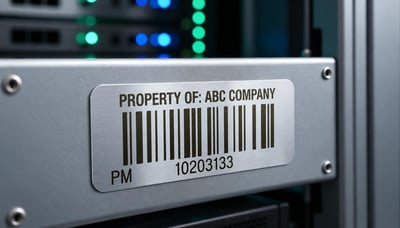 Anodized aluminum tags work best in data center environments because they offer non-reflective, high-contrast barcode readability, thin profiles for tight rack margins, and long-term stability across server room heat corridors.
Data center server rooms require precise asset tracking across thousands of dense server chassis, rack enclosures, and network switches. Thin-gauge aluminum tags sit flush against server faceplates without interfering with rack slides or cable routing, while high-tack acrylic adhesives resist edge-lifting caused by continuous cooling airflow. To structure your next facility audit, explore The Ultimate Data Center Audit Checklist for Asset Tagging.
DoD UID and Government Compliance
Metal asset tags — specifically photo-anodized aluminum and stainless steel — are fully compliant with DoD UID mandates and MIL-STD-130 standards for permanent item marking.
The U.S. Department of Defense mandates that mission-critical military equipment and high-value government property carry a permanent Unique Item Identifier (UII). The technical specification for these UID labels is defined under MIL-STD-130, requiring 2D Data Matrix codes that remain scan-verified throughout the asset’s lifecycle. ID Label’s Department of Defense UID labels are fully IUID compliant with U.S. military standards, available in stainless steel, aluminum, polyimide, and polyester. Learn more about our specialized manufacturing standards for the defense industry.
Common Use Cases for Metal Asset Tags and Labels
Industrial enterprises deploy metal barcode tags across diverse environments to maintain serial traceability and asset control:
- IT and Data Center Equipment: High-density metal barcode labels applied to servers, storage arrays, network racks, and power distribution units (PDUs) for rapid physical audits.
- Industrial and Manufacturing Equipment: Heavy-duty metal nameplates attached to stamping presses, CNC machinery, conveyors, and electric vehicle (EV) automotive manufacturing lines subjected to chemical solvents and high heat.
- Fleet and Outdoor Equipment: Weatherproof aluminum tags mounted on trailers, chassis, heavy construction machinery, and utility infrastructure.
- Property and Inventory Tags: Secure capital asset tags placed on laboratory instruments, medical devices, and valuable facility fixtures.
To learn more about optimizing your asset tracking workflows, read our guides on the 4 advantages of asset tracking labels and using asset tags to improve equipment tracking.
How to Choose the Right Metal Label for Your Application
Follow this step-by-step evaluation process to specify the exact metal label construction for your facility:
- Match Material to Environment: Choose lightweight photo-anodized aluminum for general outdoor use, data centers, and high-density barcode scanning. Specify stainless steel or brass for environments with extreme abrasion, caustic acids, or temperatures exceeding 1,000°F.
- Confirm Mounting Method: Select pressure-sensitive acrylic adhesive backings for smooth, clean surfaces like sheet metal or powder-coated server racks. Choose mechanical fasteners (rivets, drive screws, or wire ties) with pre-drilled holes for curved, textured, oily, or high-vibration surfaces.
- Check Compliance Needs Upfront: Verify whether your project requires adherence to government standards like MIL-STD-130, industrial practices like ASTM B666, or facility safety guidelines like OSHA 1910.145 before finalizing label artwork and material specs.
- Verify Barcode Scan Distance and Contrast: Match the label finish (matte vs. gloss), code density, and tag size to your facility’s scanning hardware and line-of-sight requirements.
- Request a Sample Before a Full Order: Test physical sample tags under your actual operating conditions, including exposure to facility washdowns, chemicals, and extreme temperatures, to ensure performance before full deployment.
Click here to request a sample from ID Label
Frequently Asked Questions
What is the difference between aluminum and stainless steel asset labels?
Aluminum asset labels are lightweight, flexible, and offer exceptional chemical and UV resistance when photo-anodized. Stainless steel labels are heavier-duty, rigid, and engineered for environments featuring extreme temperatures (exceeding 1,000°F), severe physical impact, or harsh acid washdowns.
How long do metal labels last outdoors?
High-grade photo-anodized aluminum metal labels are designed to last 20 years or more outdoors. Because the graphic image is sealed inside the anodic layer of the metal, it resists fading, chipping, and weather corrosion caused by UV sunlight and temperature swings.
Are metal asset tags compliant with MIL-STD-130 and DoD UID requirements?
Yes. Photo-anodized aluminum and stainless steel metal asset tags meet all Department of Defense MIL-STD-130 requirements for permanent item marking, readability, and 2D Data Matrix barcode density.
What metal label material works best in a data center?
Anodized aluminum tags work best in data centers due to their thin profile, non-reflective finish for high-contrast scanning, and strong adhesive bonding that holds up under continuous thermal airflow inside server racks.
Do metal labels need special adhesives or mounting hardware?
It depends on the mounting surface. Smooth, flat metal or painted surfaces bond securely with high-tack 3M acrylic adhesives. Rough, cast, oily, or highly textured surfaces require mechanical fasteners such as pop rivets, drive screws, or stainless steel wire ties inserted through pre-drilled mounting holes.
What information can be printed on a metal label?
Metal labels can feature 1D linear barcodes, high-density 2D Data Matrix or QR codes, sequential serial numbers, human-readable text, company logos, safety warnings, and custom field matrix layouts.
Selecting metal identification tags requires matching substrate performance, surface adhesives, and graphic processes directly to your application’s operational demands. ID Label provides a complete, single-vendor solution for manufacturing custom-engineered labels, warehouse signage, and offering nationwide installation services to ensure your asset tracking system performs reliably from day one. Ready to test durable metal tags in your operating environment? Request a sample to get in touch with an ID Label expert, or learn more about our custom asset tags and labels.