

When launching a new warehouse management system (WMS), building out a greenfield distribution center, or executing a full-facility overhaul, operations leaders focus heavily on software configurations, testing environments, and capital equipment. However, a critical planning gap often emerges: treating barcode labels and overhead signage as an afterthought or a minor punch-list item. Physical location identifiers represent the literal data architecture of your inventory tracking system. If a scanner cannot read a rack label at a height of 30 feet, or a forklift operator misinterprets an aisle sign, your multi-million-dollar technology infrastructure stalls.
A successful warehouse label installation is a complex project defined by precise lead times, structural dependencies, and technical engineering requirements. And that’s not a last-minute logistics task. Mismanaging this phase can disrupt facility handoffs, push back WMS milestones, and create operational bottlenecks.
This comprehensive guide details how to plan your installation strategically, covering initial facility scoping, standard project phases, go-live coordination, zone-by-zone sequencing, and the hidden risks of opting for a do-it-yourself (DIY) approach.
When to Start Planning Your Warehouse Label Installation
Planning for a warehouse label and sign installation should begin at least 8 to 10 weeks prior to your target installation date. Treating barcode deployment as a rapid, end-of-project task ignores the physical realities of customized industrial manufacturing and data validation.
There are three primary operational triggers that require an upfront, structured labeling project plan:
1. New Facility Build-Out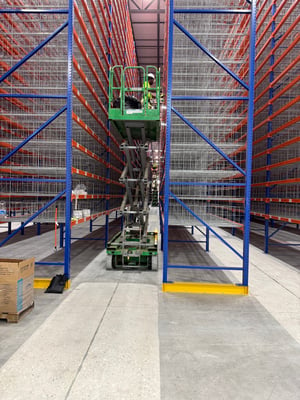
A greenfield or expansion project requires careful synchronization with general contractors and equipment vendors. Labeling planning must begin while racking systems are being finalized so that physical dimensions, beam profiles, and surface finishes can be analyzed before manufacturing begins.
2. WMS Go-Live or System Upgrade
When transitioning to a new WMS or updating an existing platform, data structures change. Your physical barcodes must match the updated software constraints perfectly. Initiating planning early allows your team to map out data strings, check digits, and validation workflows using a comprehensive WMS integration and labeling checklist.
3. Relabeling an Existing Live Operation
Updating a live, active facility requires a specialized strategy to avoid halting fulfillment. Early planning ensures you evaluate technical options, such as cover-up blockout materials, magnetic backings, or magnetic multi-level arrays, by studying options for relabeling warehouse racks without draining your internal resources.
As for lead times, customized industrial label manufacturing typically requires 10 to 15 business days following final proof sign-off, with an additional two to four days for secure freight shipping to the job site. Factoring in data audits and site scoping, securing an eight-to-10-week window is essential to hit your facility milestones on time.
How to Scope Your Project
Before requesting an engineering estimate or production quote, a facility manager should gather core architectural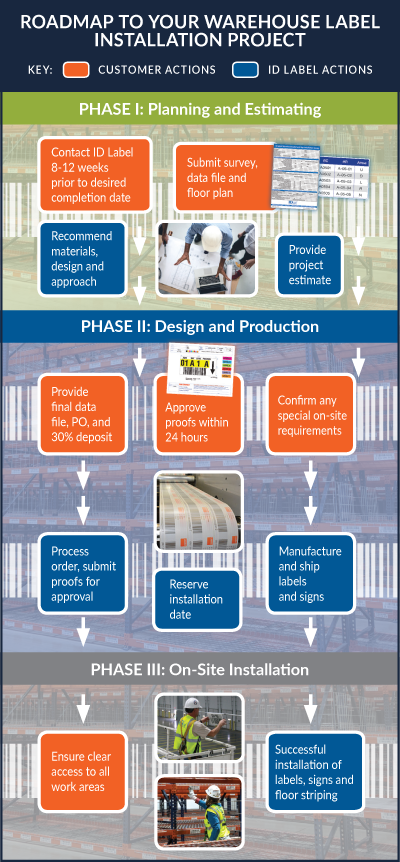 and data specifications. Answering these questions upfront ensures an accurate project scope and eliminates surprise changes mid-project.
Before requesting a formal estimate, ensure your operations team can answer the following questions:
- How many rack locations, beam labels, and sign positions does the facility have?
- Is this a new facility or a live operation?
- Which zones need labels, signs, or both?
- Are any zones cold storage, freezer, or outdoor?
- Has the location naming convention been finalized?
- What barcode symbology does the WMS require?
- What is the target go-live or completion date?
Once these parameters are defined, managing data anomalies and structural constraints becomes highly systematic. For direct assistance in auditing your physical blueprint or defining material compositions, ID Label offers project consultation services to guide you through the process.
Coordinating Warehouse Label Installation with a WMS Go-Live
Coordinating label installation with a WMS go-live requires working backward from your launch date and treating physical labels as software dependencies. Many barcode projects fail or run over budget because data validation and manufacturing are squeezed into the final week before go-live, leaving zero room to correct data file corruptions or physical sequencing errors.
If your WMS go-live is eight weeks out, here is exactly what the label installation timeline looks like:
Week 1: Data Intake and Site Mapping
Finalize the facility location naming convention and confirm precise barcode symbologies with your WMS vendor. Complete the initial engineering intake survey, and submit the complete architectural floor plan alongside your preliminary location data file.
Weeks 1–2: Scope Engineering and Estimating
Receive a comprehensive project estimate from your installation partner detailing material engineering, sign fabrication styles, and on-site labor. Submit your formal purchase order (PO) and 30 percent project deposit to secure manufacturing and installation crew windows.
Week 2: Final Data Engineering and Proofing
Submit your finalized, clean location data file. Review and approve the manufactured label proofs within 24 hours to authorize the full industrial production run.
Weeks 2–4: Custom Manufacturing and Site Prep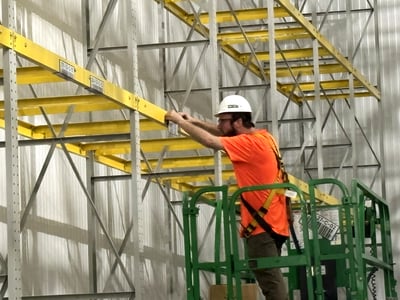
Industrial manufacturing occurs over 10 to 15 business days. Concurrently confirm facility access protocols, safety certifications, and specific on-site installation schedules.
Weeks 4–5: Logistics and Freight Management
Finished custom materials are kitted, sequenced, and shipped directly to the facility via secure freight tracking (2 to 4 days transit).
Weeks 5–7: On-Site Professional Installation
Managed field crews arrive on-site to prep surfaces, deploy specialized lifts, and install rack labels and overhead signs systematically across designated zones.
Week 8: Scan Validation and Go-Live
Execute final software and hardware validation. Achieve 100% scan-verified labels and signage in place as live inventory hits the floor.
The single most common roadblock that disrupts this eight-week schedule is an unstable location data file or an unoptimized numbering scheme. To prevent layout confusion, ensure your structural framework uses consistent rules for effective warehouse numbering schemes before submitting data to production.
The Three Phases of a Warehouse Label and Sign Installation Project
A professional, turn-key installation project moves systematically through three phases. Each phase relies on a clear handoff of inputs from the customer and deliverables from the engineering partner.
Phase I: Planning and Estimating
What the Customer Provides: Architectural floor plans, preliminary location data spreadsheets, and a completed site environment intake survey.
What ID Label Delivers: Technical material recommendations (e.g., retroreflective vs. polyester synthetic face-stocks), sign backing designs, and a complete, transparent project scope estimate. Operations teams can initiate this phase by scheduling a session through our specialized project consultation program.
Phase II: Design and Production
What the Customer Provides: A finalized naming convention, an audited data file free of duplicates, a signed purchase order, and immediate sign-off on electronic color proofs.
What ID Label Delivers: Precise data verification checks, customized serialization printing, application of durable protective laminate coatings, and organized, sequential packaging designed for efficient on-site unpacking.
Phase III: On-Site Label & Sign Installation
What the Customer Provides: Complete facility readiness (cleared aisles, assembled racking), a designated on-site operations contact, and coordination of safety and access protocols.
What ID Label Delivers: A fully managed, insured field installation crew that executes clean surface preparation, precision laser-aligned label application, and secure overhead sign suspension according to the agreed work order. To track these dependencies yourself, review our structured warehouse integration checklist as a practical reference.
Zone-by-Zone Installation Sequencing
How do you install warehouse labels without disrupting operations? The answer is structured zone-by-zone sequencing. By dividing a facility into isolated operational blocks, installation crews can execute precision rollouts while active fulfillment continues unhindered in adjacent spaces.
 When managing large-scale infrastructure projects, sequencing changes based on facility status and location type:
- Prioritize Inactive Zones First: Begin installation within receiving docks, shipping staging lanes, and dock door locations. These open areas establish baseline scanner connections and allow crews to clear peripheral areas rapidly.
- Synchronize Greenfield Sites with Mechanical Progress: For new facilities, coordinate closely with the rack installation schedule. Barcode labels cannot be properly aligned or applied until rack beams are fully dropped, bolted, and safety-cleared.
- Isolate Active Pick Zones in Live Facilities: For ongoing operations, isolate specific aisles or pick-modules sequentially. Work is scheduled during low-volume shifts, over weekends, or during designated maintenance windows to eliminate cross-traffic between installation teams and forklift operators.
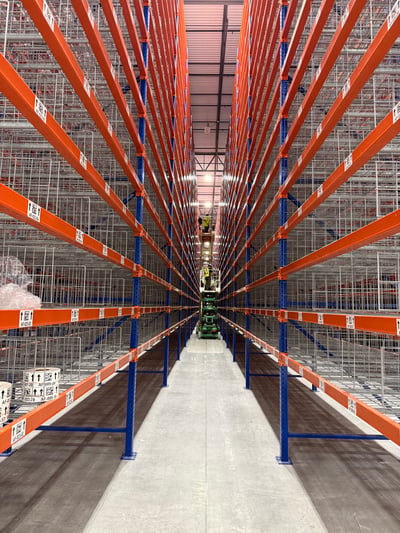
- Account for Specialized Equipment Deployments: Installing overhead aisle markers and long-range retroreflective signs requires a clear path for scissor lifts, specialized rigging tools, portable power generators, and auxiliary lighting arrays.
- Execute Scan Accuracy Testing Progressively: Run an immediate scan validation test zone by zone. Never leave an aisle or zone until a representative sample of labels has been physically scanned and verified against your hardware requirements.
The power of this structural sequencing is proven at massive scales. For instance, during a major warehouse rack labels and signs installation project in a Midwest mega-distribution center, meticulous planning allowed the installation team to mount half a million labels and 50,000 hanging signs, ultimately beating the client’s strict completion deadline with an entire week to spare.
Similarly, when managing multi-site supply chain updates, strict timeline sequencing is the only way to safeguard efficiency. This approach was central when Lowe’s upgraded its WMS across 15 flatbed distribution centers. The complex project required carefully scheduled manufacturing and logistics handoffs over an 18-month duration. By manufacturing custom-laminated labels engineered to precise space requirements, every single facility achieved an error-free changeover on a rolling schedule without disrupting retail fulfillment.
The Common Pitfalls of DIY Warehouse Label Installation
While utilizing internal warehouse staff or temporary general laborers to install labels may look like a cost-saving measure on an initial spreadsheet, the physical and operational risks of a do-it-yourself (DIY) approach are severe. Barcode installation requires specialized industrial expertise.
Opting for an in-house installation introduces four significant operational risks:
- Timeline Exceeded: DIY installations typically take 50 percent longer to complete compared to experienced, professional deployment teams. This extended timeline stalls system validation and delays facility handoffs.
- Internal Productivity Loss: Reassigning your internal warehouse specialists or material handlers to an installation project removes them from daily fulfillment duties, directly hurting your core output and driving up overhead costs.
- Equipment and Logistics Friction: Mounting overhead signs and long-range barcode placards requires sourcing, renting, and operating specialized gear like scissor lifts, industrial cleaning compounds, and rigging equipment. If a project stalls, unexpected lift rental extensions can easily surpass the price of a professional installation contract.
- Label Sequencing Errors: Misapplying a multi-level label sequence or skipping a single digit creates massive data mismatches within your WMS. Identifying, peeling, re-printing, and re-applying out-of-sequence labels after a system has gone live is an incredibly expensive and labor-intensive error.
The Professional Difference
ID Label eliminates these failure points by utilizing its own highly trained, full-time employees for label and sign installations. This guarantees consistent craftsmanship, strict adherence to site safety standards, and flawless scan-accuracy validation from day one.
Frequently Asked Questions
1. What information do I need to provide to get a warehouse installation project estimate?
To generate an accurate estimate, you need to provide your facility’s architectural floor plan, an approximate count of rack storage locations (including levels per bay), the status of the building (new construction vs. live environment), and a summary of any specialized environmental conditions, such as cold-storage or freezer spaces.
2. How long does a typical warehouse label and sign installation take from start to finish?
On-site label and sign installation timing varies based on scale and facility complexity. While a standard 150,000-square-foot facility may take less than a week, massive regional distribution hubs require advanced phasing. For example, our expert crews installed over 550,000 labels and signs in a midwestern mega-center with a week to spare due to strategic scheduling.
3. Can labels and signs be installed in a live warehouse without shutting down operations?
Yes. Professional installation services use a zone-isolation strategy to complete installations without halting your daily business operations. By executing work in self-contained blocks or shifting schedules to off-peak hours, fulfillment continues uninterrupted in adjacent aisles.
4. What is included in ID Label’s nationwide installation services?
ID Label provides a comprehensive, turnkey project management experience. This includes initial layout and material engineering consultations, master data file editing and proofing, custom domestic manufacturing, logistics coordination, site-surface preparation, laser-aligned physical installation, and a final, comprehensive scan-verification audit.
5. Do I need to hire separate vendors for labels, signs, and installation?
No. Fragmenting your project across separate label manufacturers, signage fabricators, and local installation contractors introduces severe communication gaps and finger-pointing if data errors or label failures occur. Partnering with a single-source vendor ensures complete accountability and seamless integration.
Partner with the Experts for a Flawless Warehouse Installation
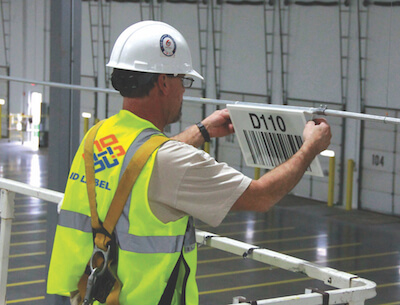 Planning a seamless warehouse label and sign installation requires a combination of precise data verification, advanced material science, and disciplined physical labor. Consolidating these requirements under a single-source manufacturing and installation partner is the single best way to de-risk your upcoming WMS launch or facility expansion.
ID Label manages the entire deployment lifecycle end-to-end. We design, manufacture, and install millions of custom barcode labels and overhead signs annually using our own dedicated field crews. By maintaining complete control over both the industrial production lines and the physical deployment on your floor, we guarantee that your warehouse data structure is built to last.
Ready to secure your project timeline and guarantee 100% scanning accuracy? Request a quote today to partner with an ID Label project expert, or contact us directly to review your upcoming facility schematics.